The Castle of Spells
Creation for the Château de Carneville
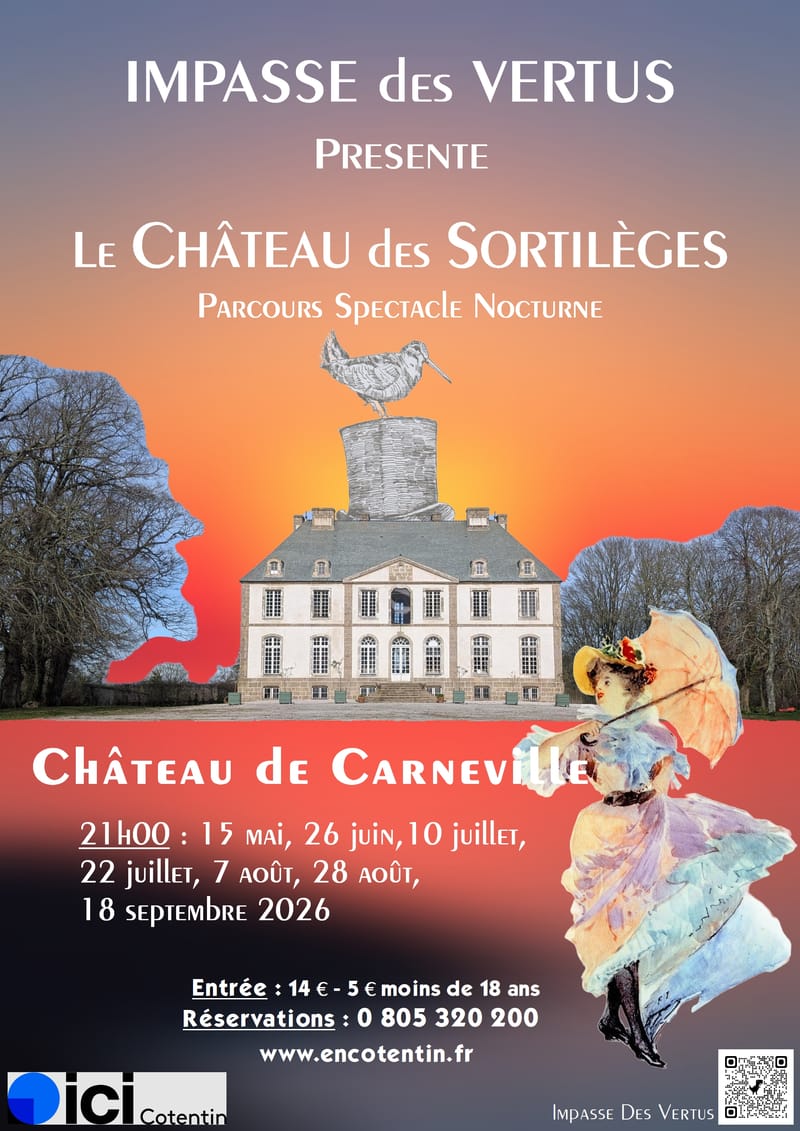
The Castle of Spells, a musical show-performance
As evening falls, when the day's visitors have departed and silence reigns, the ancient walls of Carneville Castle become intimate. They tell extravagant love stories through music, along a theatrical journey that leads you from the cellars to the attics of the "Castle of Spells," more alive and vibrant than ever. Based on the works of Maupassant and Chekhov. May 15, June 26, July 10 and 22, August 7 and 28, and September 18, 2026, at 9 p.m.
The Lyre Castle
Creation for the Château de Gratot
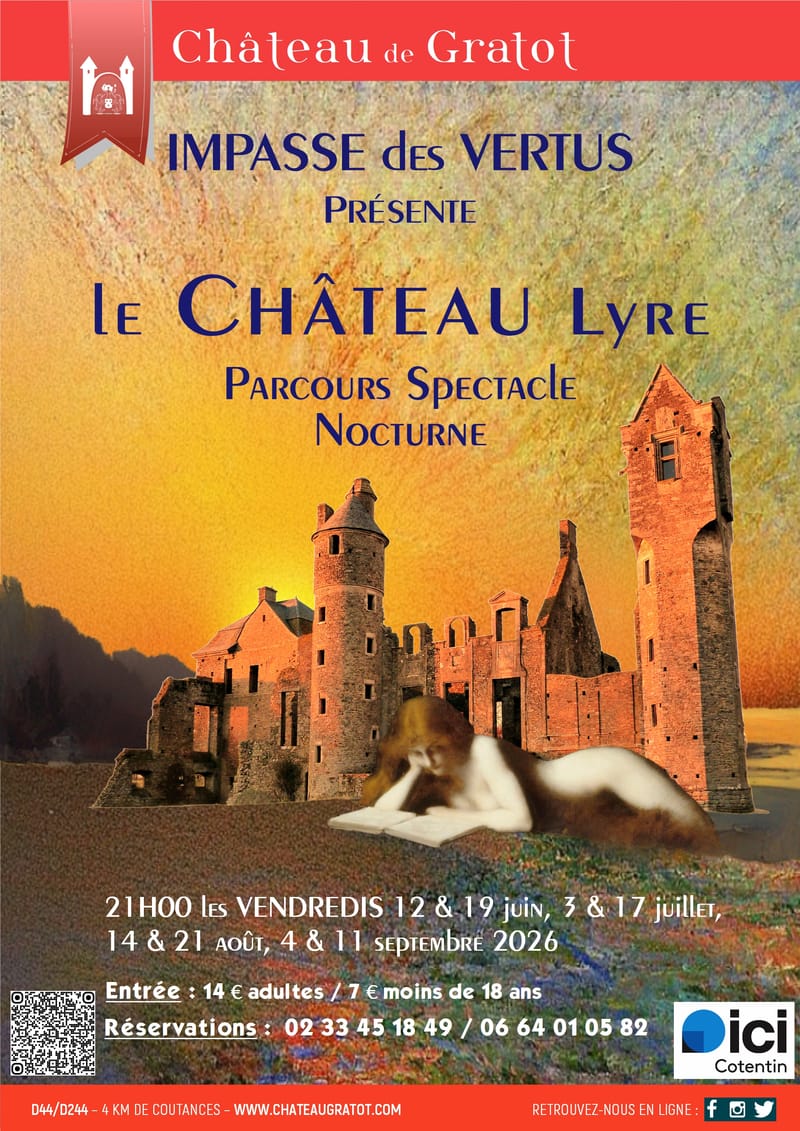
The Château Lyre, a musical performance-tour
What immediately strikes you when you discover Gratot Castle is the utterly unique character of its silhouette. Here, men had built a beautiful castle, but time has reclaimed it and sculpted a work unlike any other; it has deconstructed, liberated, opened up, and, in its boundless creativity, offers us a sublime ruin, a breathtaking wind instrument upon which, since time immemorial, the mistress of the place sings, the whimsical fairy who refuses and defies death. Gratot is a lyrical castle. The superhuman voice of the fairy who haunts and protects it sings for eternity of legendary loves on her stone lyre. “The Lyre-Castle”: a musical performance that takes you on extravagant journeys of desire and love, led by the most beautiful female operatic voices. Fridays June 12 and 19, July 3 and 17, August 14 and 21, September 4 and 11, at 9 p.m.
Fucking Castle
Musical show
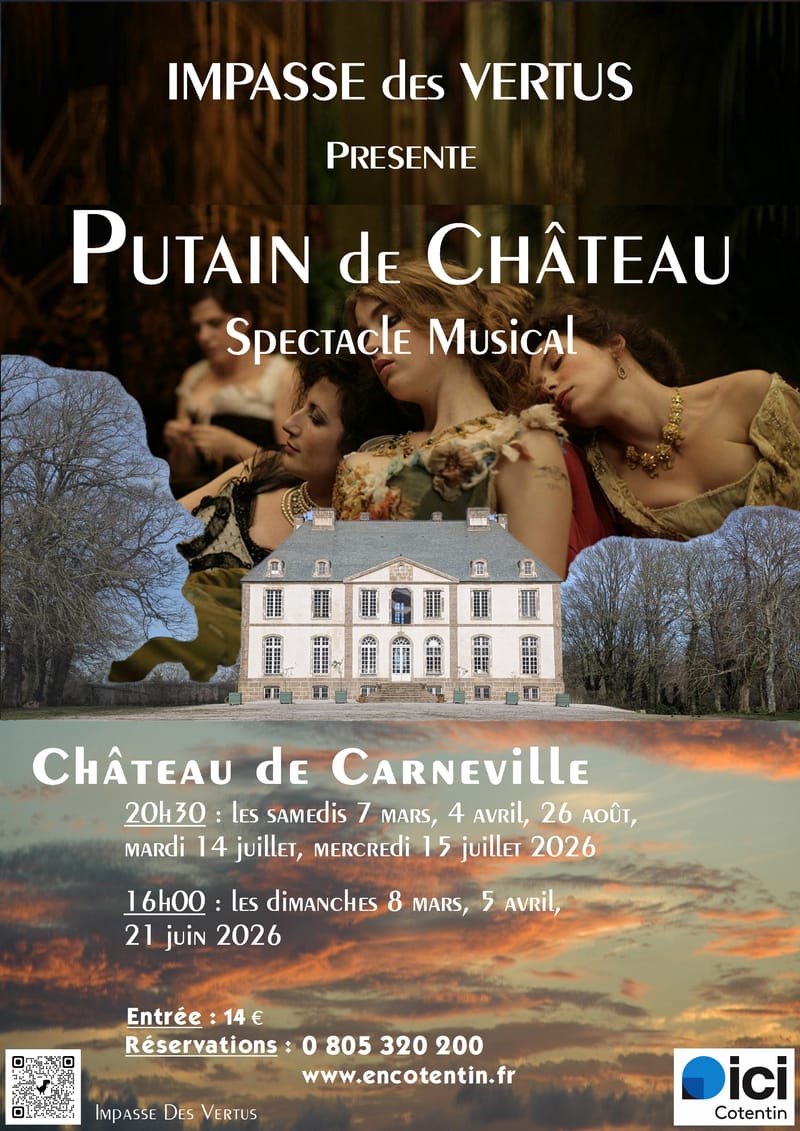
“Damn Castle” illustrates a little-known chapter in the history of Carneville Castle, which housed a brothel during the Second World War. The pink walls and graffiti in the castle's attic still bear witness to this disturbing episode. Of course, the years have passed, and in 2026 we will celebrate the 80th anniversary of the closure of brothels in France. Of course… and yet, on certain evenings, when the visitors have left and silence has returned, the spirits of the girls still haunt the old walls of the castle that was their home, telling their lives, their dreams and illusions, their joys and tears to those who know how to listen. Constructed from literary and journalistic texts from the 1880s to the 1930s, interwoven with the most beautiful "street songs," this musical performance transports us to a bygone, unimaginable, perhaps even monstrous world, where the brothel is more than an institution: it's a cog in the machine of society. With "Putain de château" (Damn Castle), the Château de Carneville becomes intimate, revealing, by candlelight, a secret chapter of our history and paying a vibrant tribute to these women with enslaved bodies and free spirits. June 21 at 4 p.m., July 14 and 15, August 26 at 8:30 p.m.
THE BALL OF THE VIRTUES: a musette ball from the 1930s.
In the early 1930s, there were more than 250 Bals Musette in Paris. And every city, every village danced to the sound of the Accordion. The Bal Musette and Dance were much more than a socio-cultural phenomenon: a true Art of Living.
⇋๑۩❉۩๑⇌
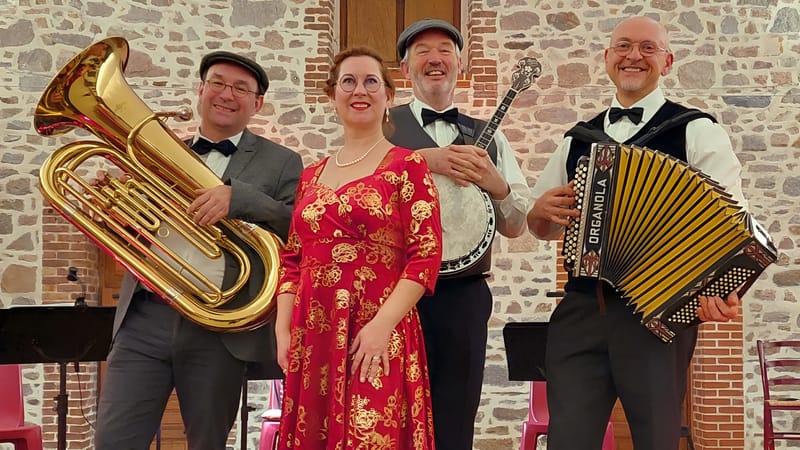
IMPASSE des VERTUS revives the Pleasure of DANCE at the same time as the abundant repertoire that accompanies it: Musette Waltzes, Tangos, Javas, Polkas, Paso-dobles, Fox-trot, Marches, Mazurkas ... and the most beautiful Songs of this period of extraordinary musical creativity, draw you into the frenzy of the nights of yesteryear. Because during these decades when the musette ball and dance were the reason for living of the people of France, most of the songs are also dances. Immortal or forgotten, they dialogue today with the most beautiful instrumental works composed for the accordion of the origins. Dance teachers are happy to join the IMPASSE des VERTUS musette ball to guide the first steps of those who wish to take up dancing: the Impasse des Vertus musette ball is then preceded by a dance class (all levels), and the ball itself is interspersed with introductions to the dances of the musette ball.
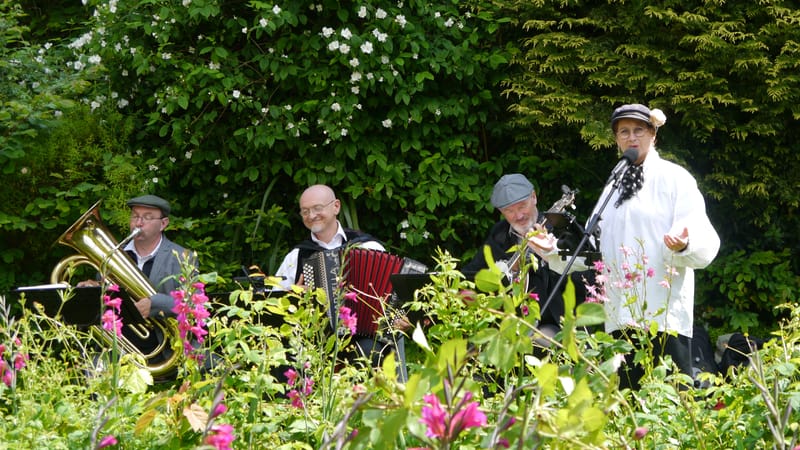
IMPASSE des VERTUS en CONCERT
A Musical Journey to the heart of the 30s and 40s, where the treasures of Realistic Song dialogue with the most beautiful works of the great masters of the original accordion.
⇋๑۩❉۩๑⇌
Lyrical and melancholic, the repertoire composed for the accordion during this golden age that were the 30s and 40s, speaks to the heart from the outset. And this music that had not been played for almost a century, this music that we had never heard, is nevertheless immediately familiar and intimate, because it has remained in the collective unconscious. Our parents, grandparents or great-grandparents met and loved each other on "Coeur sentimental", "Nostalgie nocture", "Frivolité", "Etoile des guinguettes" or "Idilio de Amor". The poignant vibration of the accordion of the origins remains secretly in our DNA. It is this musical secret that IMPASSE des VERTUS reveals today, on the instruments for which it was composed. In this concert, the resurrected masterpieces of the original bal musette dialogue with the most beautiful songs of this era: they are the faces, the voices and the lives of the little people of France who still sing and dance in secret around us... to the sound of the accordion.
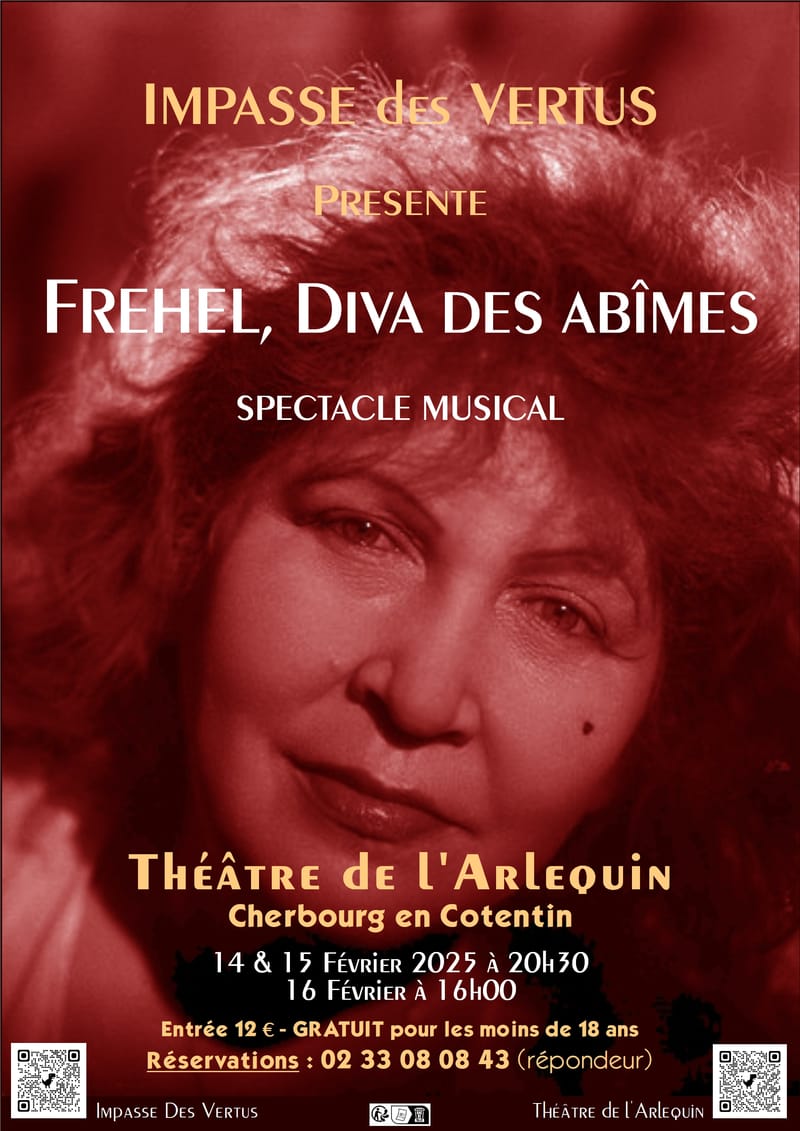
Fréhel, Diva des abîmes, spectacle musical
Premiere at the Théâtre de L'arlequin, in Cherbourg, on February 14, 15 and 16, 2025.
-=₪۩۞۩₪=-
Immense, enormous, absolutely free, sincere and sensitive to the point of obscenity, Fréhel is probably the emblematic singer of France between the two wars. She inspired the best authors and composers of her time, and leaves behind a repertoire of extraordinary beauty, largely forgotten. -=₪۩۞۩₪=- IMPASSE des VERTUS resurrects it today, and tells in music the improbable destiny of “The unforgettable forgotten one” who, more than any other, will have known at the same time the abysses and the summits, lived the infamous and the sublime. -=₪۩۞۩₪=- “I would like to fall asleep one day, to leave without suffering to the sound of the accordion. One last exhilaration, and goodnight, goodnight pleasure… I am no more afraid of death than I was afraid of life. Look, I have the Big Dipper engraved in my pupils. And I was born on a Friday the 13th. These are signs, here in the moor. I cried, I suffered, I was happier than any woman on Earth. Writers have included me in their works, Colette, Mac Orlan, I won gold, I possessed everything. Of course I believe in my songs, otherwise I would sing them hymns! I believe in the Good Lord like when I was a kid… He knows well what we are doing, the Good Lord… I am sure of myself, I tell you, after the big plunge!…” Fréhel Fréhel, diva of the abysses Musical show Duration: 1h40 Vocals: Frédérique Delay / Accordion, narration: Philippe Corbin / Directed by: Philippe Corbin and Denis Giraud.
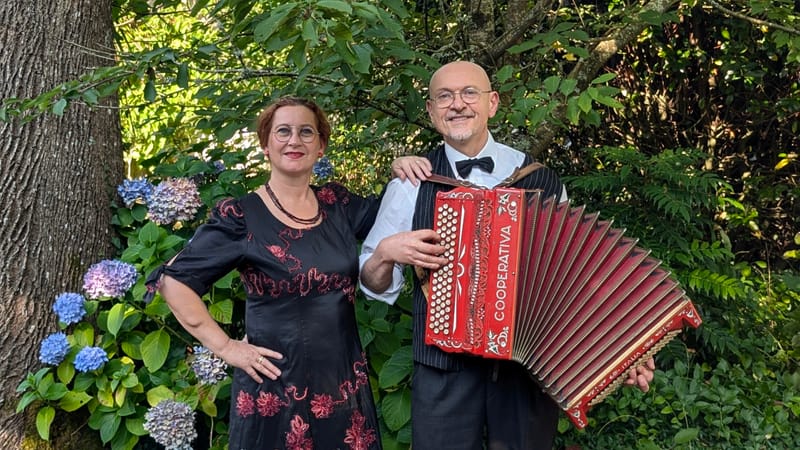
COEUR de LILAS, duo accordéon-voix
The song was born in the street: the singer and her accordionist are its soul and its vibrant heart.
-=₪۩۞۩₪=-
If some of the greatest successes of Fréhel, Damia, Berthe Sylva or Lucienne Delyle have reached us and still sing in our memories, most of the Songs that accompanied and illuminated Life during the first half of the 20th century have fallen silent: they were nevertheless Life, the joyfully banal or tragic daily life of the generations that preceded us, their Hopes and their Dreams; and listening to them tenderly, we find our own, intact and thrilling. They dialogue here with the most beautiful instrumental works composed for the accordion, and take you, for the duration of a concert, a show or a ball ... into the mists of time.